
Copyright © 2026 Hunan Qiqin Environmental Protection Technology Co., Ltd
SEARCH WHAT YOU WANT
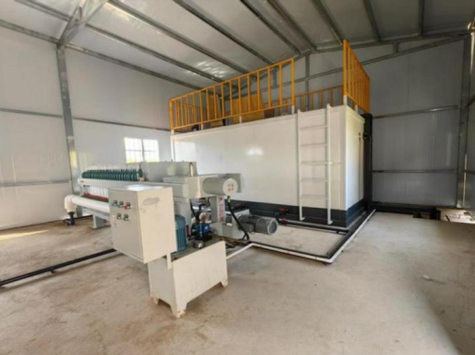
This customer is a professional antimony product deep processing enterprise. Its products are widely used in flame retardants, catalysts, glass clarifying agents and other fields. A large amount of industrial wastewater is generated during antimony smelting and processing. Qiqin adopts customized processes and treatment agents, and the wastewater treatment meets the discharge standards.
This customer is a professional antimony product deep processing enterprise. Its products are widely used in flame retardants, catalysts, glass clarifying agents and other fields. A large amount of industrial wastewater is generated during antimony smelting and processing. Qiqin adopts customized processes and treatment agents, and the wastewater treatment meets the discharge standards.
Chenzhou Antimony Products Co., Ltd. is a professional antimony product deep processing enterprise and a professional manufacturer of antimony oxide. Its products are widely used in flame retardants, catalysts, glass clarifying agents and other fields. A large amount of industrial wastewater is generated during antimony smelting and processing, presenting the following characteristics and challenges:
1. Wastewater characteristics:
● High toxicity and ecological hazard: Wastewater contains highly toxic, carcinogenic, and teratogenic substances such as antimony, arsenic, and heavy metals, which are difficult to biodegrade and easily accumulate in water bodies, soil, and organisms, posing a serious threat to ecology and human health.
● High concentration and high load: Total antimony, arsenic, heavy metals SS. The salinity is much higher than that of conventional industrial wastewater, and the treatment load is high and the difficulty is high.
● Severe pH fluctuation: The production process causes the pH value of wastewater to fluctuate sharply between strong acid and strong alkali, requiring higher stability of treatment agents, equipment, and processes.
● Complex composition and coexistence of multiple pollutants: heavy metals, salts, SS, and other co pollutants. A single process is difficult to meet the standard and requires multi-level combination treatment.
● Large fluctuations in water quantity and quality: fluctuating with changes in raw material sources, production processes, and operating conditions, with strong impact loads, and the treatment system needs to have strong impact resistance.
2. Core challenge:
● Difficulty in meeting emission standards: Antimony, as a characteristic pollutant, has stricter national emission standards, and conventional processes are difficult to stably meet the requirement of antimony emission concentration<0.05mg/L.
● High requirements for process stability: pH fluctuations and water quality and quantity impacts place higher demands on the adaptability of equipment and control systems.
● Environmental risk prevention and control: It is necessary to thoroughly eliminate the risk of leakage and excessive discharge of highly toxic heavy metals to prevent environmental pollution accidents.
Chenzhou Antimony Products Co., Ltd. is a professional antimony product deep processing enterprise and a professional manufacturer of antimony oxide. Its products are widely used in flame retardants, catalysts, glass clarifying agents and other fields. A large amount of industrial wastewater is generated during antimony smelting and processing, presenting the following characteristics and challenges:
1. Wastewater characteristics:
● High toxicity and ecological hazard: Wastewater contains highly toxic, carcinogenic, and teratogenic substances such as antimony, arsenic, and heavy metals, which are difficult to biodegrade and easily accumulate in water bodies, soil, and organisms, posing a serious threat to ecology and human health.
● High concentration and high load: Total antimony, arsenic, heavy metals SS. The salinity is much higher than that of conventional industrial wastewater, and the treatment load is high and the difficulty is high.
● Severe pH fluctuation: The production process causes the pH value of wastewater to fluctuate sharply between strong acid and strong alkali, requiring higher stability of treatment agents, equipment, and processes.
● Complex composition and coexistence of multiple pollutants: heavy metals, salts, SS, and other co pollutants. A single process is difficult to meet the standard and requires multi-level combination treatment.
● Large fluctuations in water quantity and quality: fluctuating with changes in raw material sources, production processes, and operating conditions, with strong impact loads, and the treatment system needs to have strong impact resistance.
2. Core challenge:
● Difficulty in meeting emission standards: Antimony, as a characteristic pollutant, has stricter national emission standards, and conventional processes are difficult to stably meet the requirement of antimony emission concentration<0.05mg/L.
● High requirements for process stability: pH fluctuations and water quality and quantity impacts place higher demands on the adaptability of equipment and control systems.
● Environmental risk prevention and control: It is necessary to thoroughly eliminate the risk of leakage and excessive discharge of highly toxic heavy metals to prevent environmental pollution accidents.


Copyright © 2026 Hunan Qiqin Environmental Protection Technology Co., Ltd